
Literature
Oman through generations: tradition, identity and change in Celestial Bodies
Celestial Bodies by Jokha Alharthi told by its Italian translator Giacomo Longhi.

Celestial Bodies by Jokha Alharthi told by its Italian translator Giacomo Longhi.
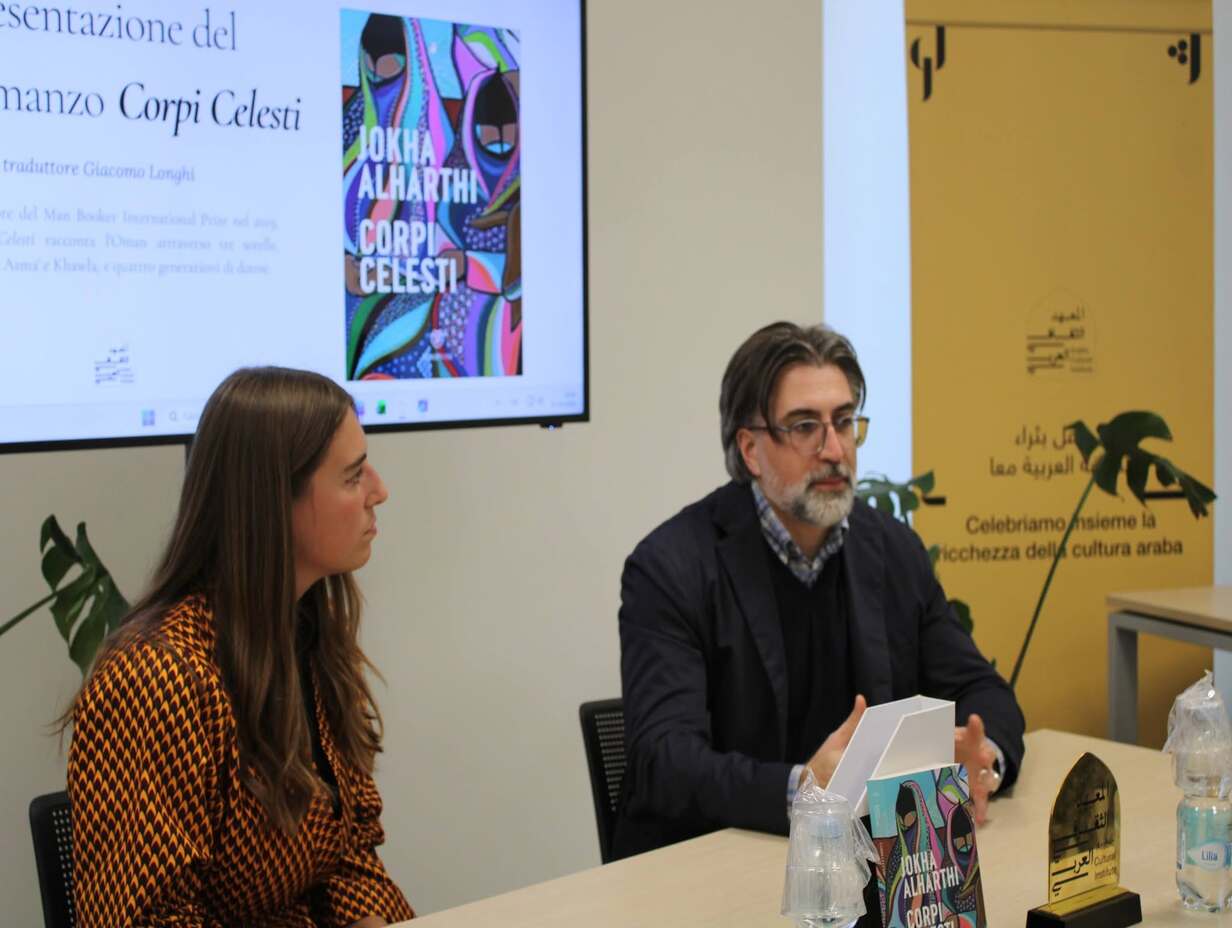
Oman tells its story through the lives of its people, the traditions they preserve, and the changes shaping their society. These themes were at the heart of a meeting dedicated to Celestial Bodies, the acclaimed novel by Omani author Jokha Alharthi, featuring Dr Giacomo Longhi, the novel’s Italian translator, and Dr Mila Fantinelli, a PhD candidate in Arabic Literature at the Catholic University of the Sacred Heart in Milan.
Originally published in Arabic, Celestial Bodies takes readers into the life of an Omani family, following the experiences of several generations of women. Through their personal stories, family relationships and individual choices, the novel offers a portrait of a country in transition, where the legacy of the past meets the aspirations of the present.
Located on the Arabian Peninsula, Oman boasts a rich historical and cultural heritage shaped by trade routes, seafaring traditions and centuries of exchange with different peoples and civilisations. Its identity is also reflected in everyday customs: from hospitality, a cornerstone of Omani culture, to the sharing of traditional Omani coffee, and the use of frankincense, a symbol of the country’s ancient heritage that continues to play a role in family and social life.
In Celestial Bodies, these cultural dimensions intertwine with universal themes such as love, freedom, marriage, the role of women, and the relationship between the individual and the community. The intimate sphere of family life thus becomes a lens through which to explore broader social transformations, revealing the tensions between long-established customs and emerging possibilities.
It is precisely this interplay between tradition and modernity that makes the novel’s portrayal of different generations so compelling. While the desire to preserve one’s roots remains strong, new aspirations and different visions of the future are also taking shape. Younger generations must navigate an evolving sense of identity, seeking a balance between the heritage they have inherited and the opportunities offered by change.
The meeting also provided an opportunity to reflect on the importance of literary translation, thanks to Giacomo Longhi’s contribution in bringing Jokha Alharthi’s voice to Italian readers. Translating a literary work means crossing linguistic and cultural boundaries, conveying not only words, but also nuances, proverbs, cultural references and human experiences that might otherwise remain distant to readers from different backgrounds.
Ultimately, Celestial Bodies offers an invitation to explore contemporary Oman through the power of literature. By delving into its history, traditions and social transformations, readers are encouraged to discover a society in which the past continues to shape the present, while new generations contribute to defining the future.
Literature
Carlo Guarmani’s El Kamsa and the thousand-year-old legacy of the Arabian horse, now brought back to its cultural homeland through Mohamed Eltedawy’s Arabic translation